First, Identify Which Key Type You Have
The replacement path depends entirely on your key type, so it helps to identify yours before anything else. There are four broad categories on the road today, and most vehicles fall cleanly into one of them.
Knowing your category tells you whether the job is purely mechanical (cutting a blade) or whether it also involves electronics (programming a chip to your car's computer). The year, make, and model of your vehicle are the fastest way to confirm which type applies.
- Basic mechanical key: a plain metal blade with no electronics, common on many vehicles built before the late 1990s.
- Transponder key: a metal key with a hidden chip in the plastic head that the car must recognize before it will start.
- Remote head key (flip or combo key): a transponder key combined with the lock/unlock buttons in one unit.
- Smart key / proximity fob: a keyless push-to-start fob that unlocks and starts the car while it stays in your pocket or bag.
How Each Key Type Gets Replaced
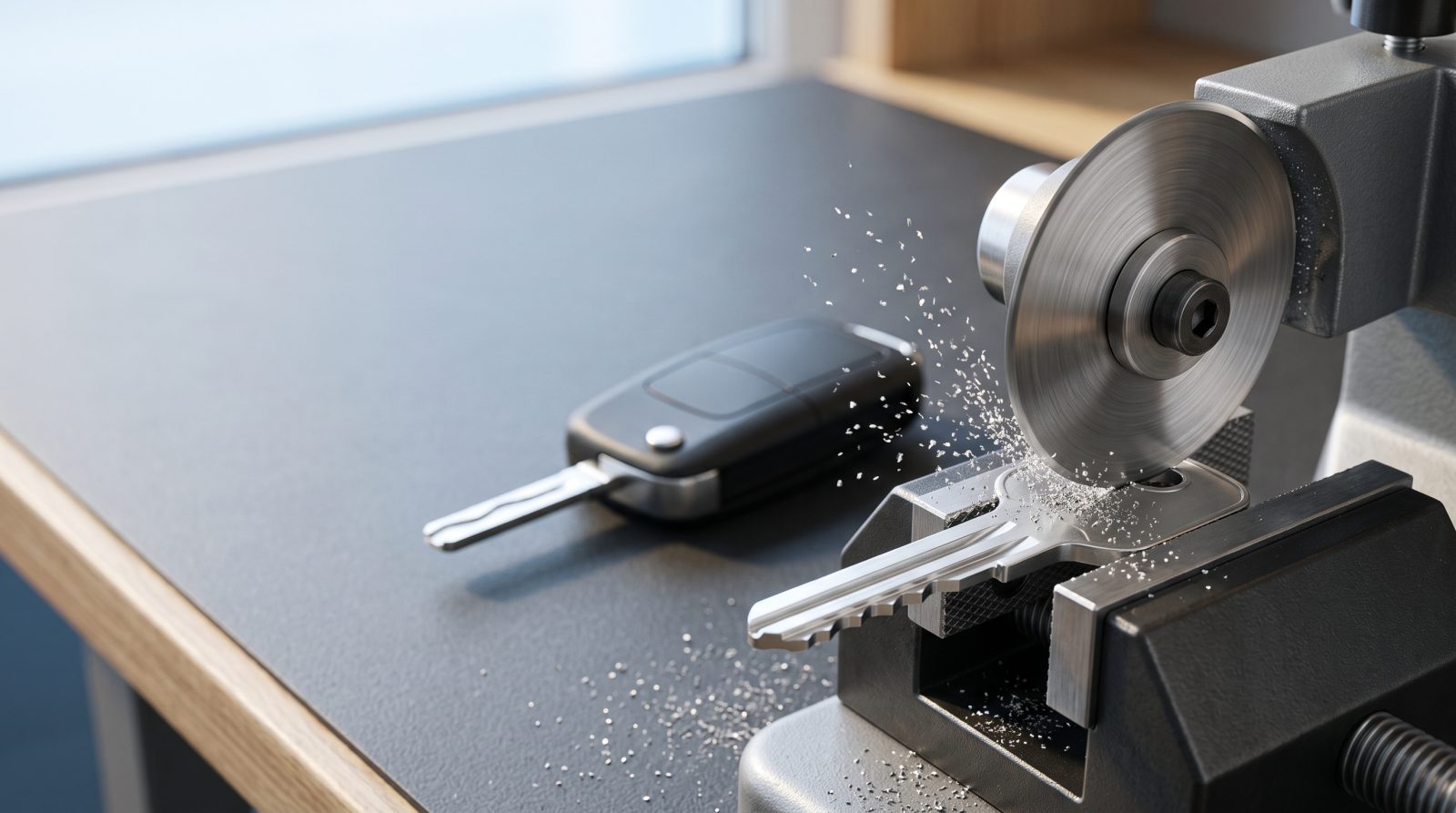
A basic mechanical key is the simplest case. A locksmith cuts a new blade to match your vehicle's key code or by decoding the existing lock, and the new key works immediately with no electronics involved.
A transponder key adds a second step. After the blade is cut, the chip in the key head has to be programmed so your car's immobilizer accepts it. Without that programming, the key will physically turn but the engine will not start, which is why a hardware-store copy often fails on modern cars.
Remote head keys and flip keys follow the same cut-plus-program path, with the added step of syncing the lock and unlock buttons to the vehicle. Smart keys and proximity fobs are the most involved: there is no traditional blade to cut (though many include a hidden emergency blade), and the fob must be paired electronically to the car so push-button start recognizes it.
For car key replacement, key fob and transponder programming, and related work across this corridor, you can reach Auto Locksmith San Francisco at (415) 943-3009.
What a Locksmith Needs From You
Having the right details ready makes the visit faster and helps confirm the correct key and chip before any work begins. A few pieces of information do most of the heavy lifting.
Proof that you own or are authorized to use the vehicle is required before service. This protects you as the owner and confirms the key is going to the right person.
- Year, make, and model of the vehicle, which determine the key type and programming method.
- The VIN (vehicle identification number), often visible at the base of the windshield or in the door jamb, used to confirm the correct key.
- How many working keys you currently have, since replacing a lost-only key can differ from copying an existing one.
- Proof of ownership or authorization, such as your registration and a matching ID.
Lost All Keys vs. Making a Spare
Making a spare when you still have a working key is generally the straightforward scenario: the existing key confirms the vehicle's setup, and the new key is cut and programmed alongside it.
When every key is lost, the job takes more steps. The locksmith may need to decode or access the lock to generate a working blade, then program the new key (and on some vehicles, reset the system) so the car accepts it. Mobile auto locksmith service is well suited to this because the work happens at your vehicle, which is helpful when the car cannot be driven anywhere without a key.
Why Cutting and Programming Are Two Different Jobs
It is worth understanding that cutting and programming are separate functions that often need separate tools and knowledge. Cutting shapes the metal so it physically fits and turns the lock. Programming is the electronic handshake that tells your car's immobilizer or push-start system to trust the key.
This split is the single biggest reason modern car keys take more work to replace than older ones, and why a key that turns but won't start the engine is almost always a programming issue rather than a cutting one. A locksmith who handles both can complete the full replacement in one visit, so the key both fits and starts the car before you drive away.
Yes. When all keys are lost, a locksmith can decode or access the lock to cut a working blade and then program it to your vehicle. You'll need to show proof of ownership or authorization first.
Most cars built in the last two decades use a transponder chip or smart fob that must be programmed to the vehicle's immobilizer. A copied blade can turn the ignition but won't start the engine until the electronic side is programmed.
Yes. Auto Locksmith San Francisco is a mobile auto locksmith serving San Francisco, Oakland, Hayward, San Mateo, Fremont, and San Jose. Call (415) 943-3009 and we come to you.
Need an auto locksmith now: (415) 943-3009
Have your location, vehicle year, make, model, key type if known, and proof of ownership ready.