What "Keys For Cars Near Me" Usually Means
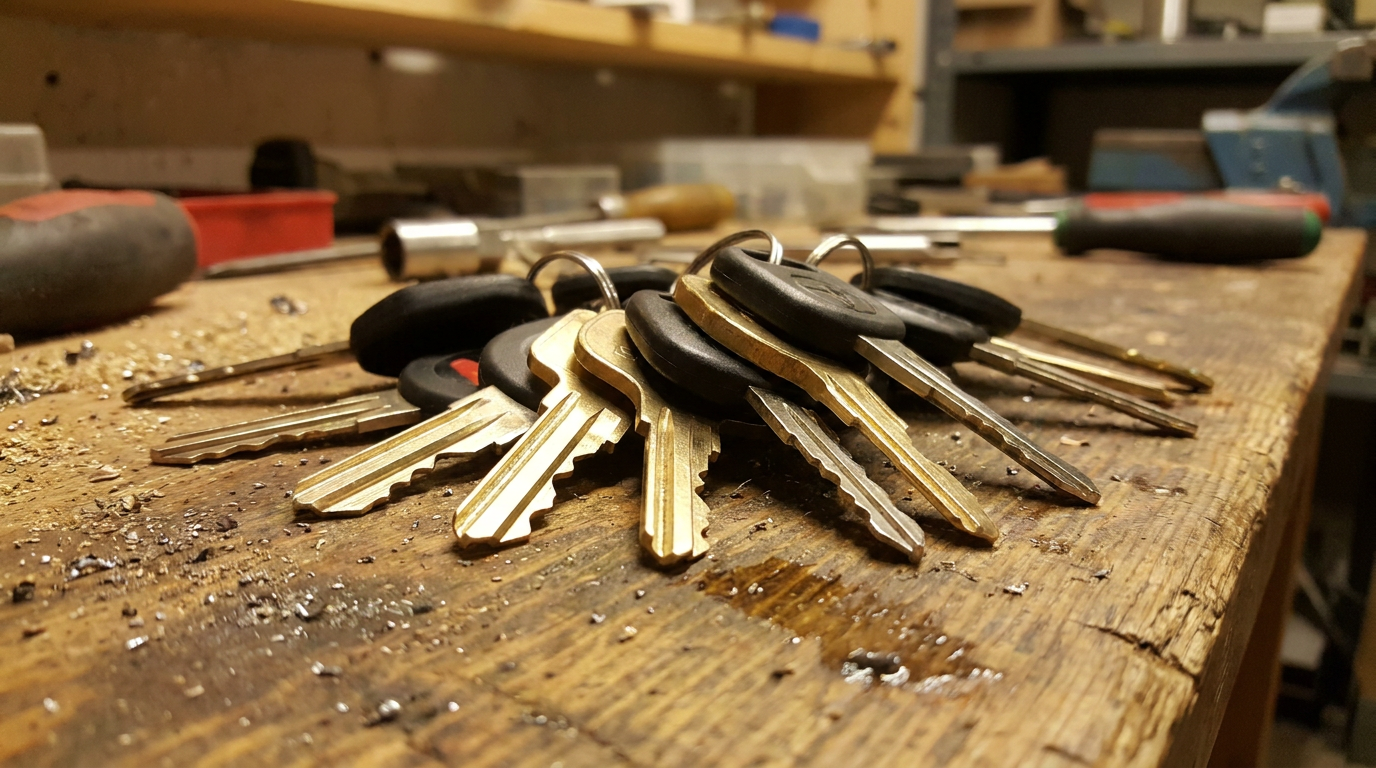
When people search for keys for cars near them, it's almost always one of three situations: a key has been lost entirely and there's no spare, an existing key still works but is worn, cracked, or the buttons on the fob have stopped responding, or someone simply wants a spare made before they end up locked out or stranded. Each of these calls for a slightly different approach, and figuring out which one applies to you is usually the first thing we sort out on the phone before heading out.
Mobile Locksmith vs. Dealership vs. Hardware Store
A dealership can order and program factory keys, but it typically means towing the car in (if you have zero working keys) and waiting for parts and an appointment slot, which can take days. A hardware store or big-box key kiosk can cut a basic metal blade cheaply, but most vehicles built in the last two decades use a transponder chip that a kiosk cutter has no way to program — so the freshly cut blade will open the door but won't start the engine. A mobile auto locksmith brings key-cutting and programming equipment to your location, so in most cases the car doesn't need to move at all — we come to you, whether that's your home, office, or wherever the vehicle is parked.
Types of Car Keys We Work With
Not all car keys are the same, and it's worth knowing the categories:
- Basic transponder keys — a standard metal key with a small chip embedded in the plastic head that communicates with the car's immobilizer.
- Remote head keys — a metal key blade combined with a remote for locking/unlocking, all in one head.
- Smart or proximity fobs — no blade to insert into the ignition; the car detects the fob nearby and allows push-button start.
Each type has its own cutting and programming process, and the cost and time involved can vary depending on which one your vehicle uses.
What to Have Ready Before We Arrive
Because programming a new car key is tied to your vehicle's security system, we'll need to confirm you're the owner or authorized to have a key made — a driver's license and something showing you own or have the right to the vehicle (registration, insurance card) is standard. It also speeds things up if you know your vehicle's year, make, and model, and if you have your VIN handy, even better, since some parts and programming procedures are model-year specific. If you have any working key at all, even a spare that just needs new buttons, let us know — it can change what's needed.
Lost Key vs. Locked Out — Two Different Problems
It's worth separating "I lost my key" from "I'm locked out." A lockout means a working key exists somewhere — inside the car, at home, wherever — and the fix is simply getting the door open, usually without touching the key system at all. A lost key means there's no key to fall back on, and depending on whether you have a second spare elsewhere, the job may range from a straightforward duplicate to a full all-keys-lost situation where the vehicle's security system has to be accessed before any new key can be programmed. Telling us which situation you're in when you call helps us bring the right equipment the first time.
Why Programming Matters as Much as Cutting
A key that looks correct isn't the same as a key that works. Cutting the metal blade to the right shape only handles the mechanical side — getting the key to physically turn the lock. For the engine to actually start, the vehicle's immobilizer has to recognize the chip inside the key as authorized. That recognition step is programming, and it's specific to your vehicle, not something that can be done generically. This is the main reason two keys that look identical can behave completely differently once you try to start the car.
Getting Started
The fastest way to find out exactly what your car needs is a phone call. Tell us your vehicle's year, make, and model, whether you have any working keys, and where the car currently is, and we'll walk you through what to expect and get you an estimate before anyone heads out. Having your ID and proof of ownership ready when we arrive keeps the visit moving quickly once we're on site.