This is a different situation than a lost spare
There's an important distinction that a lot of people don't realize until they're in the middle of it: replacing one key while another one still works is a completely different job from replacing a key when none are left. If you still have a working key, a locksmith or dealer can usually use that key to program a duplicate relatively directly. But when every key to the vehicle is gone — lost, stolen, or otherwise unavailable — there's no working key to reference, and the car's security system generally has to be approached from a different angle. In the industry this is often called an "all keys lost" situation, and it's worth knowing that going in, because it sets more realistic expectations for time and process than assuming it's a quick duplicate.
Why a locksmith can't just cut a key from your VIN
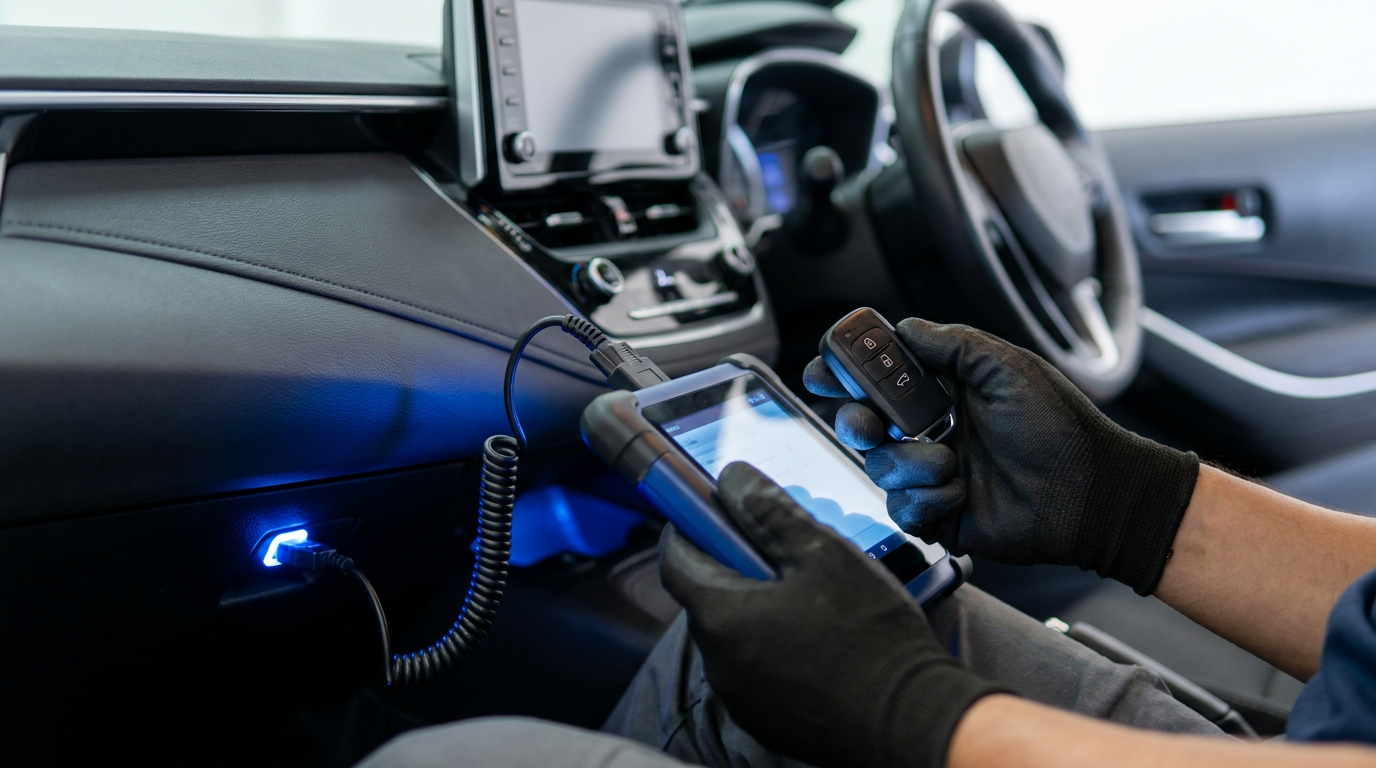
It's a common assumption that a locksmith can look up your VIN, cut a matching key, and hand it over on the spot. For older vehicles with purely mechanical locks, something close to that was often true. But most modern cars pair a physical key with an electronic transponder or smart key system, and the vehicle's onboard computer needs to recognize that specific key before it will allow the engine to start — not just accept that the metal cut matches the lock. When there's no existing key to reference, getting a new key recognized as the only valid key for that car typically means accessing the vehicle's key programming system directly, which is a more involved procedure than cutting a duplicate from a key you already have. The exact process and equipment needed varies quite a bit by manufacturer and model.
What proof of ownership you'll typically need
Because programming a brand-new key when there's no original left effectively hands someone the ability to drive off in that car, requiring proof of ownership before doing that work is standard practice across the auto locksmith industry — not a formality, but a basic safeguard against a vehicle being keyed for someone who isn't its rightful owner. In general, this means bringing your vehicle registration or title along with a matching government-issued photo ID. Requirements can vary a bit depending on the specific circumstances, so it's worth calling ahead and asking exactly what to bring so there's no back-and-forth once we're on site.
What information speeds things up
Because the process depends so much on the specific vehicle, having a few details ready before you call makes a real difference in how quickly things move. The most useful information is the exact year, make, and model of the car, since key systems can vary even between different trims of the same model. It also helps to know, if you can, what kind of key the car originally used — a basic metal key, a transponder key with an embedded chip, or a smart/proximity key that doesn't need to be inserted at all. If you're not sure, that's fine too; we can often figure it out once we're looking at the vehicle, but any detail you can provide ahead of time helps us arrive prepared with the right equipment.
It's also worth thinking about where the vehicle is parked and whether it can be safely accessed and left in place for the visit, since this work is generally done on site rather than requiring the car to be towed anywhere. If you're calling (415) 943-3009 from somewhere other than the vehicle's location, having the exact address or parking details ready alongside your vehicle information helps the whole process move faster once you're ready to get started.
Setting realistic expectations
An all-keys-lost replacement is a more involved job than a simple duplicate, and it's reasonable to expect it to take longer and require more specialized equipment than swapping a key while a spare is still on hand. Some vehicles are more straightforward to handle than others, and the honest answer is that the exact process and timeline depend on your specific car's year, make, model, and key system. Rather than guess, the most reliable way to know what your situation involves is to call and walk through the details of your vehicle.
If you're dealing with a lost, stolen, or otherwise all-keys-lost situation, call (415) 943-3009 with your vehicle's year, make, and model on hand. We'll talk through what the process looks like for your specific car and what to have ready before we get started.