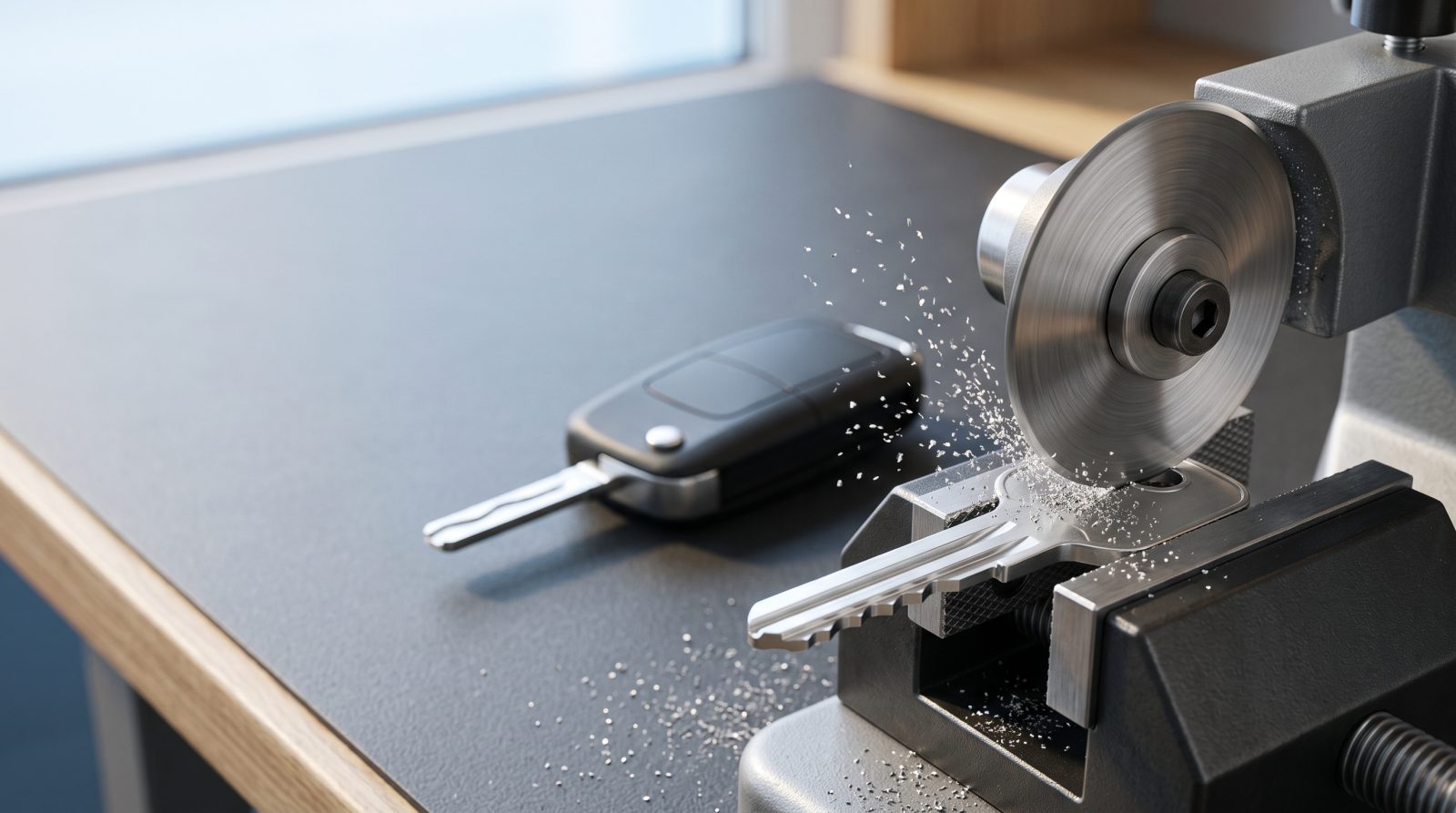
Losing or breaking a car key is one of those expenses that feels avoidable — until it happens. Then the questions start fast: what will a replacement cost, and what's the best option when you need to drive today? This guide explains why prices vary, what you're actually paying for, and how to compare a dealership quote against a locksmith quote without risking compatibility or security.
Why Car Key Replacement Prices Vary So Much
Modern keys aren't just "keys." Costs usually combine some or all of: physical key blade cutting, chip or transponder programming (immobilizer pairing), remote/key fob programming, service call or travel, after-hours support, and whether the part is OEM or aftermarket. That's why the total can range from under $100 to several hundred dollars depending on vehicle year, key type, and urgency.
Dealership: What You're Paying For
Dealership pricing tends to run higher because it typically includes OEM parts by default, dealer-only systems and workflows, higher labor rates, and sometimes towing if the vehicle can't reach the service bay. A dealer makes the most sense when your vehicle is very new or has unusual security tech, you want guaranteed OEM hardware, or you need warranty-friendly documentation.
Locksmith: What You're Paying For
A qualified automotive locksmith can often be the lower-cost alternative — especially mobile, on-site service when you're stuck at home, work, or roadside. Lower overhead, more flexible parts options, and reduced towing costs are the usual reasons. Many locksmiths can also program key fobs, including immobilizer chips and remote/proximity keys, though some newer models may still require dealer-level access — ask before you book.
Common Scenarios and What Drives the Price
A planned spare key is usually the cheapest scenario — mainly cutting and programming with no urgency premium. Losing all your keys is the highest-cost situation, since it can require generating a key from the VIN or locks and extra security verification. If your fob already works and only needs programming, that's often the least expensive path, especially when comparing dealer vs. locksmith rates for programming alone. An emergency lockout is different from a replacement entirely — if the key is simply inside the car, a locksmith may resolve it without cutting anything.
OEM vs. Aftermarket Hardware
Choosing OEM vs. aftermarket key fob hardware is mostly a budget-vs-certainty decision. OEM parts cost more but offer the tightest fit and finish; a quality aftermarket equivalent can reduce cost if it's genuinely compatible with your vehicle.
How to Get the Best Price Without Risking Compatibility
- Make a spare now — a planned key is almost always cheaper than an emergency replacement
- Ask for itemized quotes from every provider you compare, broken down by cutting, programming, and hardware
- Confirm what "programming" includes — remote buttons, immobilizer, or both
- Have proof of ownership ready to speed up service either way
Quick Decision Guide
Choose a locksmith when you want speed, on-site convenience, and a lower total cost. Choose a dealership when your vehicle is very new or complex, you require OEM-only parts and processes, or you prefer the dealer's security workflow despite the higher price. Whichever you choose, get two itemized quotes and compare cutting, programming, and hardware costs line by line — those are the real drivers of the final price.
Get an Honest Estimate
Call (415) 943-3009 with your vehicle's year, make, and model and what happened. We'll give you a straight answer and an itemized estimate before any work begins.